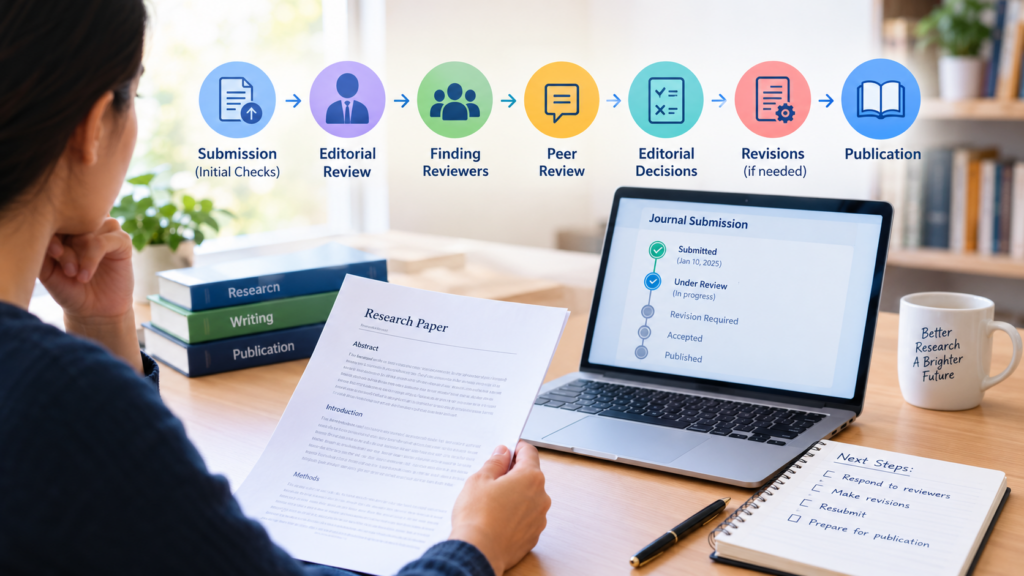
Submitting a research paper is a major milestone. After spending weeks or months conducting research, analyzing findings, and refining your manuscript, clicking the submit button can feel like the finish line. In reality, it marks the beginning of another important phase. Your paper must pass through several stages before it can appear in a published journal.
For new researchers, the waiting period can be confusing. The submission status may remain unchanged for days, reviewer invitations can take time, and editorial decisions may arrive later than expected. Understanding the academic publishing process can help you prepare for these delays and know what to expect at every stage.
Students balancing research projects, coursework, and examinations may also look for academic assistance. Searches such as Take My Online Exam and Take My Online Exam For Me reflect some of the challenges students face when managing competing deadlines. However, understanding academic requirements and developing effective study habits can help students manage their responsibilities more confidently.
1. Initial Checks
Before an editor evaluates the scientific value of your research, the journal’s editorial office checks whether your submission meets its basic requirements.
During this stage, the editorial team may examine:
- Author names, affiliations, and contact information
- Manuscript title, abstract, and keywords
- Formatting, references, tables, and figures
- Ethical approval statements and conflict of interest disclosures
- Funding information and supplementary files
If information is missing or the files do not meet the journal’s specifications, the editorial office may return the submission for corrections.
Typical duration: Approximately 1 to 5 business days.
2. Editorial Review
Once the initial checks are complete, the manuscript is assigned to an editor who assesses its suitability for the journal.
The editor considers whether the research matches the journal’s scope, offers a meaningful contribution, uses an appropriate methodology, and presents its findings clearly.
If the manuscript does not meet these expectations, it may be rejected before external peer review. This is known as a desk rejection and does not necessarily mean the research is poor.
Students who are also preparing for online assessments may search for Pay Someone To Take My Online Exam when struggling with deadlines. However, using legitimate tutoring, study planning, and exam preparation resources is a more appropriate way to manage academic pressure while maintaining academic integrity.
3. Finding Reviewers
If the editor approves the manuscript for further evaluation, the next step is to find qualified peer reviewers.
The editor usually invites two or three specialists with relevant expertise. These researchers examine the manuscript and provide feedback to help the editor make an informed decision.
Some experts decline invitations because of workload, scheduling conflicts, or limited familiarity with the topic. The editor must then invite other candidates, which can delay the review process.
The submission portal may display statuses such as reviewers invited, reviewers assigned, or under review. Their precise meanings depend on the journal’s submission system.
4. Peer Review
Peer review helps editors evaluate the quality, originality, reliability, and significance of submitted research.
Reviewers commonly assess:
- Originality and contribution to the field
- Research design and methodology
- Statistical analysis and interpretation
- Accuracy of results and conclusions
- Clarity, organization, and references
Journals may use single anonymized, double anonymized, or open peer review models. The time required depends on the journal, the complexity of the research, and reviewer availability.
5. Editorial Decisions
After reviewing the reports, the editor selects one of four common outcomes.
Accepted
The manuscript meets the journal’s requirements and can proceed toward publication, although production checks may remain.
Minor Revisions
The authors must make relatively small corrections, such as clarifying explanations, correcting references, or improving figures.
Major Revisions
The manuscript requires more substantial changes, which may include additional analysis, methodological clarification, or significant rewriting. Another review round may follow.
Rejected
The journal decides not to publish the manuscript. Authors can use the feedback to improve their work before considering another suitable journal.
Students managing several academic responsibilities may also look for Pay Someone To Take My Online Exam For Me when feeling overwhelmed. However, legitimate academic support and better time management can help them balance exams with research and writing commitments.
6. Publication Timeline
The complete publishing process varies by journal. The following estimates provide a general guide.
| Stage | Approximate duration |
|---|---|
| Initial screening | 1 to 5 business days |
| Editorial assessment | 1 to 2 weeks |
| Reviewer recruitment | Several days to several weeks |
| Peer review | 4 to 8 weeks or longer |
| Author revisions | 2 to 12 weeks |
| Additional review | 2 to 6 weeks or longer |
| Production after acceptance | Several weeks |
Many research papers take several months to a year or longer to move from submission to publication. Delays may occur because of reviewer availability, editorial workload, or repeated revisions.
7. Managing Your Waiting Period
Waiting for an editorial decision can be frustrating, but you can use this time productively.
- Track your submission: Save the submission date, manuscript ID, and journal contact information.
- Check updates periodically: An unchanged status does not automatically indicate a problem.
- Follow up professionally: Contact the editorial office if the stated review period has passed.
- Continue your research: Work on other projects instead of putting everything on hold.
- Prepare alternatives: Identify suitable journals in case you need to submit elsewhere.
Students facing exam pressure may search for Hire Someone To Take My Proctored Exam or Take My Proctored Exam For Me. However, hiring another person to complete a proctored assessment can violate institutional rules. Students should instead explore approved tutoring, revision support, and time management strategies.
Preprints may also help researchers share eligible findings earlier, provided their target journal permits this practice.
8. Responding to Reviewers
A revision request allows authors to address concerns and strengthen their manuscripts.
Start by reading every comment carefully. Group the feedback into major concerns and minor corrections, then prepare a point by point response explaining how each issue was handled.
A professional response should:
- Address every reviewer comment individually
- Explain the changes made to the manuscript
- Identify revised sections or page numbers
- Provide evidence when respectfully disagreeing with a suggestion
- Follow the journal’s formatting and submission requirements
- Meet the revision deadline
9. After Acceptance
An acceptance letter is an important achievement, but publication may still be several weeks away.
The production team typically prepares the article for publication by checking formatting, references, figures, and language. Authors may receive page proofs to correct typographical errors and identify production mistakes.
The journal may also request copyright agreements, publication licenses, or open access fees where applicable.
After these steps are complete, the article may appear online before being assigned to a scheduled journal issue.
10. Improving Your Chances
Although no service can guarantee acceptance, authors can improve their submissions through careful preparation.
Choose a journal that publishes research in your field, follow its author guidelines, explain your research contribution clearly, and ensure that the methodology supports your conclusions.
Before submission, check all references, tables, figures, ethical declarations, and supplementary materials. A knowledgeable colleague can also help identify unclear explanations or weaknesses.
Students managing multiple deadlines should plan their research and examination schedules early. Although searches for Pay Someone To Take My Online Exam may reflect academic pressure, preparing in advance and using authorized learning support are more sustainable ways to handle competing responsibilities.
Conclusion
Submitting a research paper begins a process that includes editorial screening, peer review, revisions, and publication preparation. Each stage serves a purpose, and delays do not necessarily mean that something has gone wrong.
By understanding the process, responding constructively to feedback, and choosing an appropriate journal, researchers can approach publication with greater confidence. Careful preparation and patience remain essential throughout the academic publishing journey.
Frequently Asked Questions
1. What happens after submitting a research paper?
The journal checks the manuscript, assigns it to an editor, and may send it to external reviewers. The editor then decides whether to accept it, request revisions, or reject it.
2. How long does peer review take?
The first review round often takes four to eight weeks, although some journals take longer. The complete process may last several months or more than a year.
3. What does “under review” mean?
It generally means that the manuscript is progressing through the journal’s evaluation process. The exact status may vary depending on the submission system.
4. Can a paper be accepted after major revisions?
Yes. If the authors adequately address the editor’s and reviewers’ concerns, the manuscript may be accepted after revision. Acceptance is not guaranteed, and another review round may be required.
5. What should I do if my paper is rejected?
Review the decision letter and feedback, improve the manuscript, and identify a journal that better matches your research. Follow the new journal’s submission guidelines before resubmitting.